Year-round sun, short-flight gateways from the US, and the largest cruise market on Earth.
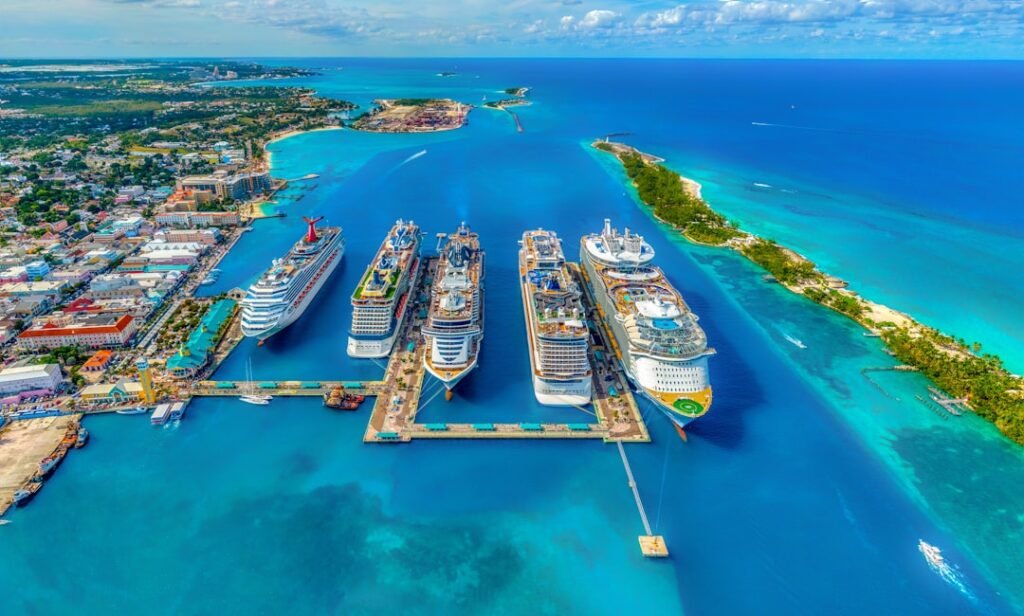
| Cruise season | Year-round (peak Dec–Apr; hurricane caution Jun–Nov) |
| Common home ports | Miami, Port Canaveral, Fort Lauderdale, San Juan, Tampa, Galveston |
| Countries / destinations | 30 covered |
| Major cruise lines | 8 lines operate here |
| Last updated | May 15, 2026 |
If you have never cruised before, odds are your first one will be here. The Caribbean is where most people start, and a good number never feel the need to sail anywhere else. The reasons are practical, not romantic. You can fly from most of the US to a homeport in under four hours, step onto a ship the same afternoon, and wake up somewhere warm the next morning. No passports-and-jet-lag ordeal, no guessing about weather. Just reliable sun and a beach a tender ride away.
What makes the region work for cruising specifically is the geography. Dozens of islands sit close enough together that a ship can hit three or four ports in a week without long stretches at sea. That means more time ashore and less time watching the ocean go by. It also means the Caribbean rewards both ends of the experience spectrum. A first-timer gets hand-held simplicity, and a veteran can keep finding islands they have not done yet.
Picking your corridor: East, West, or South
Caribbean itineraries split into three corridors, and choosing between them matters more than choosing the cruise line. Each sails out of different homeports and visits a different cluster of islands, so the corridor usually decides which airport you fly into.
The Western Caribbean leans into Mexico and Central America: Cozumel, Costa Maya, Belize, Roatan in Honduras, plus Grand Cayman and Jamaica. This is the corridor for Maya ruins, cave tubing, and some of the best diving and snorkeling in the region. Ships sail mostly from Florida’s Gulf side and Texas, so Tampa, Galveston, and New Orleans come into play alongside Miami.
The Eastern Caribbean is the classic beach run: the Bahamas, Puerto Rico, St. Thomas, St. Maarten, and the cruise lines’ private islands. Distances are short, the beaches are the postcard kind, and this is where most first-timers end up. It sails primarily from Miami, Fort Lauderdale, and Port Canaveral.
The Southern Caribbean goes deeper, down to Aruba, Curacao, Barbados, and the Windward Islands. The islands feel less developed and more distinct from one another, the water is calmer (you are below the hurricane belt for much of it), and itineraries often run longer. Many of these sail round-trip from San Juan, which puts you a couple of islands closer before you even board.
If it is your first Caribbean cruise, I would point you east for the easy beaches. If you have done the region before, south is where it gets interesting.
Best time to cruise the Caribbean
The Caribbean sails year-round, which is rare and is half its appeal. But year-round does not mean every month is equal.
Peak season runs December through April. The weather is at its most reliable, dry, warm, low humidity, and it is no coincidence this is also when fares and crowds peak. Christmas, New Year, and Spring Break are the most expensive weeks of the year to sail here, often 30 to 50 percent above the shoulder rate. If your dates are flexible, avoid them.
The real value sits in the shoulder windows: late April into May, and again from late August through November. You trade a little weather certainty for noticeably lower fares, and early May in particular gives you near-peak conditions at off-peak prices. That is the sweet spot.
Hurricane season is the asterisk. It officially runs June through November, with the genuine risk concentrated in August through October. This is not a reason to avoid those months outright. Fares are low and storms are far from guaranteed on any given sailing. But it is a reason to build flexibility into your plans. Cruise lines track weather closely and will reroute or refund if a storm threatens a ship, so the boat itself is rarely in danger. The bigger risk is your flights. Pad a day on each end and consider travel insurance, and the value months become genuinely worth it. The Southern Caribbean is your hurricane-season hedge, since Aruba and Curacao sit largely below the storm track.
What a Caribbean port day actually looks like
The rhythm here is beach-forward, and that shapes how you should plan. Unlike the Mediterranean, where you race to see ruins and old towns, most Caribbean ports are simpler. They are about getting to the right stretch of sand or the right reef and not overthinking it.
A few ports reward booking ahead. Stingray City in Grand Cayman, the cave tubing in Belize, and the catamaran-and-snorkel runs in St. Maarten and Aruba are genuinely better experiences than wandering off the ship on your own, and the good operators sell out. Plenty of other ports, though, are walkable or a cheap taxi from a great beach, and there a do-it-yourself day beats the ship excursion on both price and crowds.
The private islands are their own thing. Most of the big lines now own or lease a stretch of Bahamian or other coastline: Royal Caribbean, MSC, Disney, Norwegian, and others. These stops are engineered for an easy, included beach day, with no tendering hassle and no money changing hands ashore. Some travelers find them a manufactured version of the real thing. Others love that everything just works. Both takes are fair. Know which one you are before you build your hopes around the brochure photos.
Which cruise lines sail the Caribbean
Nearly every major line operates here, which is part of why fares stay competitive. The mass-market lines dominate by sheer volume. Royal Caribbean and Carnival run the largest fleets and the biggest ships, the floating-resort kind with waterparks and a dozen dining venues. They are the value leaders for families and first-timers. Norwegian and MSC fill out the mass-market tier. MSC is often the cheapest fare on the water, and a strong choice if you do not mind a more European onboard feel.
The premium lines, Celebrity, Princess, Holland America, Disney, sail the region heavily too, with calmer ships, better food, and an older or more family-premium crowd depending on the brand. Disney commands a real premium but earns it for families with young kids.
Luxury and small-ship lines are less common in the Caribbean than in the Mediterranean, since the region’s draw is mainstream. But they do appear, particularly on the Southern Caribbean routes where smaller ships reach the quieter islands.
Sample Caribbean itineraries
A 7-night Eastern Caribbean run on a budget puts you on a Carnival or MSC ship from Miami or Port Canaveral, calling at a private island, Nassau, and St. Thomas or St. Maarten, from around $449 per person. It is the default first cruise, and a good one.
A 7-night Western Caribbean trip in the mid-range puts you on a Royal Caribbean or Celebrity ship from Fort Lauderdale or Galveston. It calls at Cozumel, Grand Cayman, and Roatan or Belize, from around $599 to $899 per person depending on ship and season.
A 10-night Southern Caribbean voyage on Princess or Holland America sails round-trip from San Juan or Fort Lauderdale. It reaches Aruba, Curacao, Barbados, and the Windward Islands, from around $1,099 per person. It is the corridor that feels most like travel rather than a sampler.
Packing and practical tips
Pack lighter than you think. The Caribbean is casual by day and only mildly dressy at night, even on the premium lines. Reef-safe sunscreen is worth buying before you go, since it costs a fortune in port and several destinations now require it. Bring water shoes if you plan to do rocky beaches or reef snorkeling, and a dry bag for tender rides and small boats.
Most ports use the US dollar or accept it readily, and English is widely spoken across the region, so the practical friction is low. Tap water is safe on the US territories and the cruise-line private islands, but stick to bottled water on many of the independent islands. Your phone will likely roam at a daily fee on the bigger islands, though most people just use ship WiFi on port days and switch off otherwise.
If there is one thing to get right, it is shoes and sun protection. Everything else here is forgiving.
The bottom line
The Caribbean is the most-cruised region on Earth because it removes nearly every reason not to cruise. Short flights, dependable weather, islands close enough together to fill a week with port days, and fares that start lower than almost anywhere else. If you want your first cruise to be easy, sail east. If you have done it before and want something with more texture, go south, and go in the shoulder season when the prices soften. Either way, this is the region that turns people into cruisers.
Countries & destinations in Caribbean
Browse the 30 countries and destinations covered in this region. Click through for cruise-specific details, ports, lines, and best times.
🛳️ Major cruise destinations
Bahamas Jamaica Cayman Islands Dominican Republic Puerto Rico US Virgin Islands British Virgin Islands Sint Maarten Antigua and Barbuda Saint Kitts and Nevis Dominica Saint Lucia Barbados Grenada Aruba Curacao Bermuda Turks and Caicos Islands
🌎 Western Caribbean & Central America
Mexico Belize Costa Rica Panama Guatemala Honduras Nicaragua El Salvador
🌊 Part-time cruise destinations
Haiti Cuba Saint Vincent and the Grenadines Trinidad and Tobago
Top cruise lines in Caribbean
Royal Caribbean Carnival Norwegian MSC Disney Celebrity Princess Holland America
🔥 Current deals in Caribbean
Browse active cruise deals filtered to itineraries in this region.
Frequently asked questions
When is the best time to cruise the Caribbean?
Photo by Fernando Jorge on Unsplash Cruise season Year-round (peak Dec–Apr; hurricane caution Jun–Nov) Common home ports Miami, Port Canaveral, Fort Lauderdale, San Juan, Tampa, Galveston Countries / destinations 30 covered Major cruise lines 8 lines operate here Last updated May 15, 2026 If you have never cruised before, odds are your first one will be here.
Which cruise lines sail to the Caribbean?
Which cruise lines sail the Caribbean Nearly every major line operates here, which is part of why fares stay competitive.
How much does a Caribbean cruises cost?
A Caribbean cruises varies widely by line, cabin and season, but judge the all-in price — base fare plus gratuities, drinks, WiFi and excursions — rather than the headline lead-in fare.
What are the main Caribbean cruise routes?
Picking your corridor: East, West, or South Caribbean itineraries split into three corridors, and choosing between them matters more than choosing the cruise line.